
Guatemala Jadeite
The Sacred and Imperial History of Guatemalan Jadeite
The history of jadeite in Guatemala is an epic story of loss and rediscovery that spans over three millennia, making it one of the most culturally significant gemstones in human history. For the ancient civilizations of Mesoamerica—the Olmec, Maya, and Aztec—jadeite was not merely a decorative mineral; it was the ultimate currency of the soul, valued far more highly than gold. This reverence began with the Olmec, the “Mother Culture” of Mexico and Guatemala, who flourished around 1200 BCE. The Olmec were the first to master the incredible hardness of the stone and establishing complex trade routes that funneled raw jadeite from the Motagua River Valley to the high altars of their forest cities. They were particularly obsessed with a rare, translucent, blue-hued jadeite now known as “Olmec Blue.” They believed this specific color represented the deep, cool waters of the underworld and the source of all life. They carved monumental votive axes and masks from it, using nothing but abrasive sands and primitive drills, creating artifacts that remain some of the most technically accomplished stone carvings in the world today.
As the Maya civilization rose to dominance during the Classic Period (250–900 CE), the demand for jadeite exploded, turning the Motagua River Valley into the industrial heart of the Mayan empire. For the Maya, jadeite was the physical manifestation of “breath” and “water.” Every Mayan king and queen sought to be buried in a “Jade Suit” or at least a mosaic mask, believing that the stone’s eternal green color would grant them immortality in the afterlife. The city-states of Tikal, Copán, and Palenque fought for control of the jade trade routes, as the possession of jade was the primary indicator of divine right. It was used to pay tribute, settle wars, and sanctify the most sacred of bloodletting rituals. The Maya developed a sophisticated visual language for jade, identifying different grades based on color and translucency, with the bright “Imperial Green” being reserved strictly for the highest royalty. During this era, jadeite was the “Green Gold” that powered the economy of an entire continent, used for everything from tiny ear-spools to massive, ceremonial plaques.
One of the most remarkable chapters in this history is the “Five-Century Silence.” Following the Spanish Conquest in the 1500s, the cultural memory of jadeite was nearly extinguished. The Spanish conquistadors were hungry for gold and silver; they viewed the “green stones” of the Aztecs and Mayas with confusion and even disdain. As the indigenous social structures collapsed under colonization, the secret locations of the primary jadeite mines in the Sierra de las Minas were lost. For nearly 500 years, the Western world assumed that the source of ancient Mesoamerican jade had been exhausted or that it had been imported from Asia—an idea later disproven by mineralogy. The stone that had been the heartbeat of a civilization for three thousand years simply vanished from the map, becoming a geological ghost story. Archaeologists found thousands of jade artifacts in tombs, but they could not find a single active vein of the stone anywhere in the Americas.
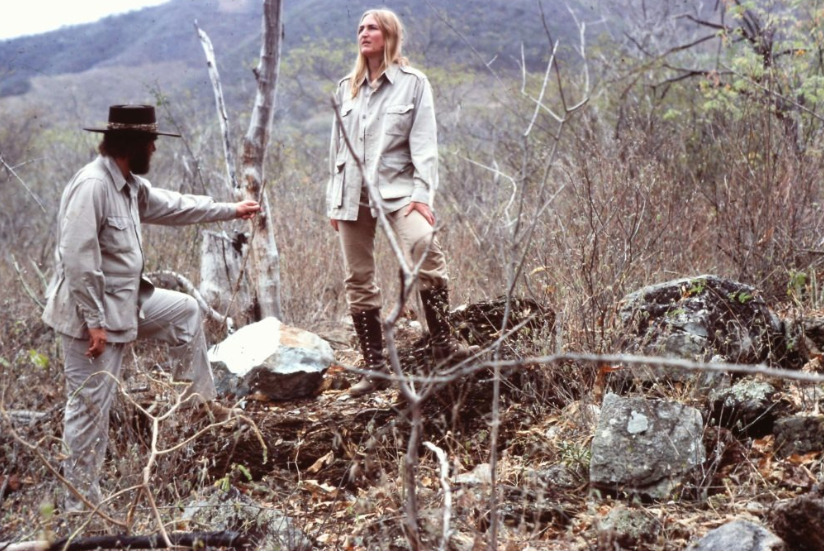
The modern “Renaissance” of Guatemalan jade began in 1974 with a story of incredible perseverance. American expatriates Jay and Mary Lou Ridinger, along with a local mineralogist named Robert Burkitt, spent years searching the rugged, thorn-filled Motagua River Valley based on ancient clues and geological maps. After surviving treacherous terrain and skeptical locals, they finally discovered outcrops of jadeite that matched the chemical signature of the ancient Olmec and Maya artifacts. This rediscovery was a global sensation in the gemological community. It proved that the ancient mines were not “gone,” but merely hidden by the thick jungle and the passage of time. The Ridingers established the first modern jade workshop in Antigua, Guatemala, hiring local artisans and training them in modern lapidary techniques. This sparked a revival of the craft, allowing descendants of the Maya to once again work the stone of their ancestors using diamond technology that the ancient masters could have only dreamed of.
Today, the history of Guatemalan jadeite is a living, breathing industry that continues to reveal new secrets. In the decades since the 1974 rediscovery, new “discoveries within the discovery” have occurred, such as the 1998 finding of the rare “Lilac Jade” following the erosion caused by Hurricane Mitch, and the subsequent discovery of “Ice Jade” and “Princesa Blue.” Guatemala has reclaimed its title as a premier global source of jadeite, standing as the only significant competitor to the Burmese jade markets. The modern industry in Antigua serves as an educational hub where the history of the Maya is preserved through stone. For the collector, owning a piece of Guatemalan jadeite is not just owning a gemstone; it is owning a piece of a 3,000-year-old lineage that survived conquest, collapse, and five centuries of being forgotten, only to emerge as vibrant and “full of breath” as it was in the days of the ancient kings.
Spiritual Beliefs and the Breath of Life
In the ancient Maya worldview, jadeite was the ultimate manifestation of “Ik“—the sacred wind or breath of life. While many cultures value gemstones for their beauty or rarity, the Maya believed jadeite was a living, breathing entity that actually exhaled moisture. This belief stemmed from the observation that jadeite boulders, being cold and dense, would often collect morning dew more readily than the surrounding limestone. To a people living in a tropical environment where water and corn were the pillars of survival, this “sweating” stone was seen as a fountain of life. Jadeite was synonymous with the Maize God, the central figure in Maya mythology who represented the cycle of birth, death, and resurrection. The vibrant green of the stone was seen as the literal “greenness” of young corn stalks, the quetzal’s feathers, and the lush forest canopy. To wear jade was to wrap oneself in the energy of growth and to align one’s own soul with the fertile forces of the universe.
The spiritual weight of jadeite was most profound in the rites of death and the transition to Xibalba (the underworld). Because jadeite was “captured breath,” it was an essential tool for the survival of the soul after the body failed. Archaeologists have discovered that for over two thousand years, Maya priests would place a single jadeite bead in the mouth of a deceased person before burial. This was not a decorative gesture; it was a functional spiritual technology. The bead was intended to catch the final “breath-soul” of the individual, acting as a vessel that would carry their essence safely through the treacherous trials of the underworld. Furthermore, the Maya would often “sacrifice” jade objects by breaking them or “killing” them during burials, believing that the spiritual essence of the stone would accompany the spirit of the deceased. This belief in jadeite as a medium for immortality is why we find kings buried in massive mosaic masks; the stone acted as a permanent, incorruptible face for the soul to wear in the spirit realm.
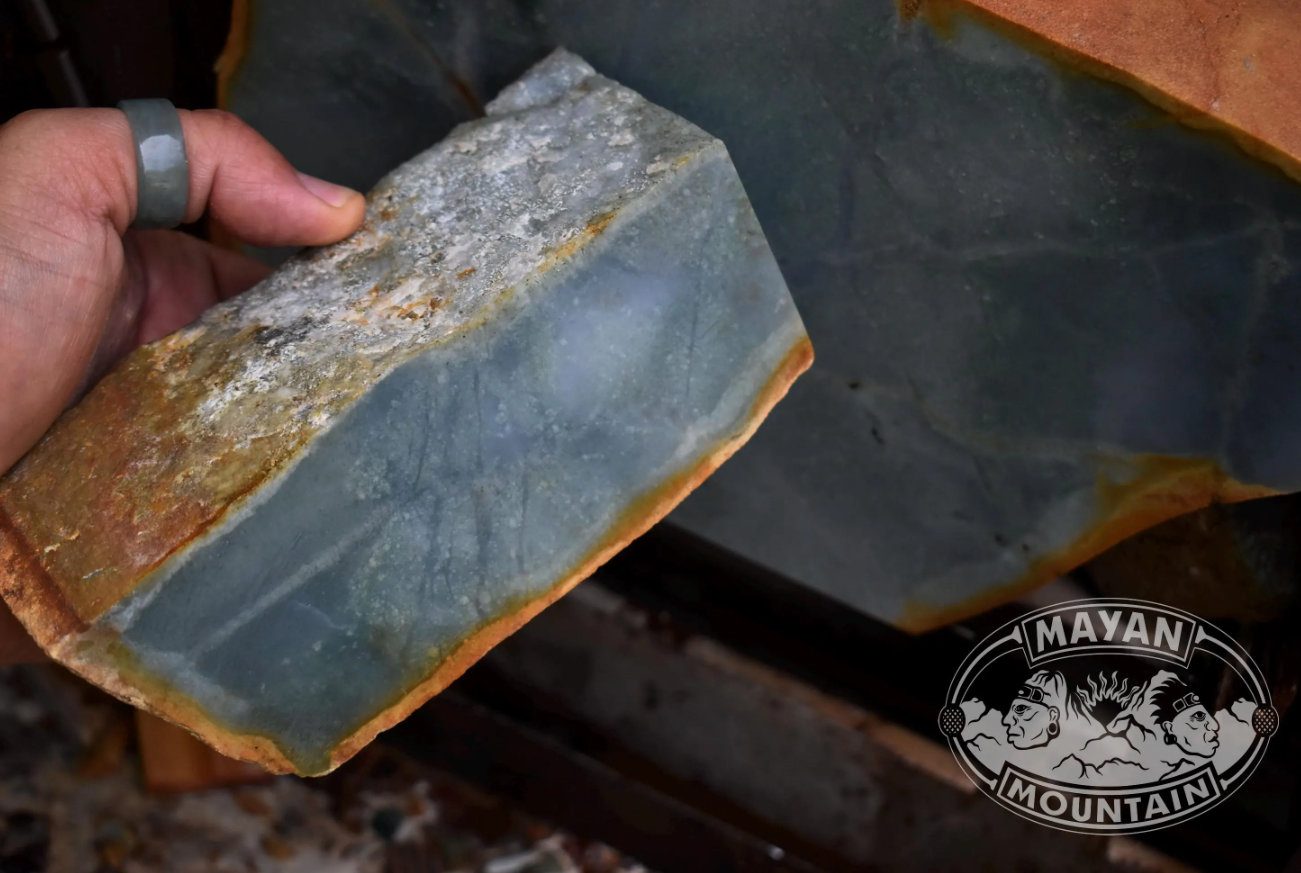
The different colors of Guatemalan jadeite each carried a distinct “vibrational” frequency in ancient spiritual practice. The Olmec Blue jade, for instance, was deeply tied to water deities and the primordial sea. Because it had a translucent, ethereal quality, it was seen as “solidified light” from the underworld’s watery depths. It was used primarily in rituals involving rainmaking and agricultural fertility. In contrast, the Black Jadeite (Galactic Jade) was viewed as a stone of ultimate protection and grounding. It was associated with the night sky and the obsidian-black voids of the cosmos. Shamanic practitioners used black jadeite to shield themselves during “astral travel” and to ward off negative spiritual entities. Even today, many in the highlands of Guatemala believe that black jadeite acts as a “spiritual vacuum cleaner,” absorbing the Mal Ojo (evil eye) and protecting children and travelers from misfortune.
In modern metaphysical practice, Guatemalan jadeite is regarded as the “Stone of the Heart” and a premier tool for manifestation. It is believed to radiate a steady, nourishing energy that helps the wearer find their true purpose in life. Unlike the high-intensity energy of some quartz crystals, jadeite provides a slow, consistent “thrum” that calms the nervous system and balances the emotional body. It is often referred to as a “Dream Stone,” placed under a pillow to encourage lucid dreaming and to help the dreamer remember the messages sent by their subconscious. For those undergoing physical healing, it is used to support the body’s filtration systems—specifically the kidneys and suprarenal glands—reflecting the ancient belief that the stone helps “cleanse” the internal waters of the person just as the Motagua River cleanses the stones of the valley.
The concept of “Mauri” or life force, which we saw in Pounamu, has a direct parallel here in the concept of “K’uh“. This is the divine essence that permeates all things, and jadeite was believed to be a “K’uh” battery. The more a piece of jadeite was handled, worn, and passed down, the more “K’uh” it accumulated. This created a spiritual lineage within the object itself. For a modern collector or lapidary, holding a piece of Guatemalan jadeite is a way of tapping into this ancient reservoir of energy. It is a stone that demands respect and intention; the Maya believed that the stone would only work for a person whose heart was in alignment with the natural law. Whether you are using it for deep meditation, as a protective talisman, or simply as a connection to the ancient Maya ancestors, Guatemalan jadeite remains a physical bridge between the earthly realm and the “Heart of the Heaven” (Huracan), offering a sense of peace that has endured for thousands of years.
Where it is Found — The Motagua River Valley and Sierra de las Minas
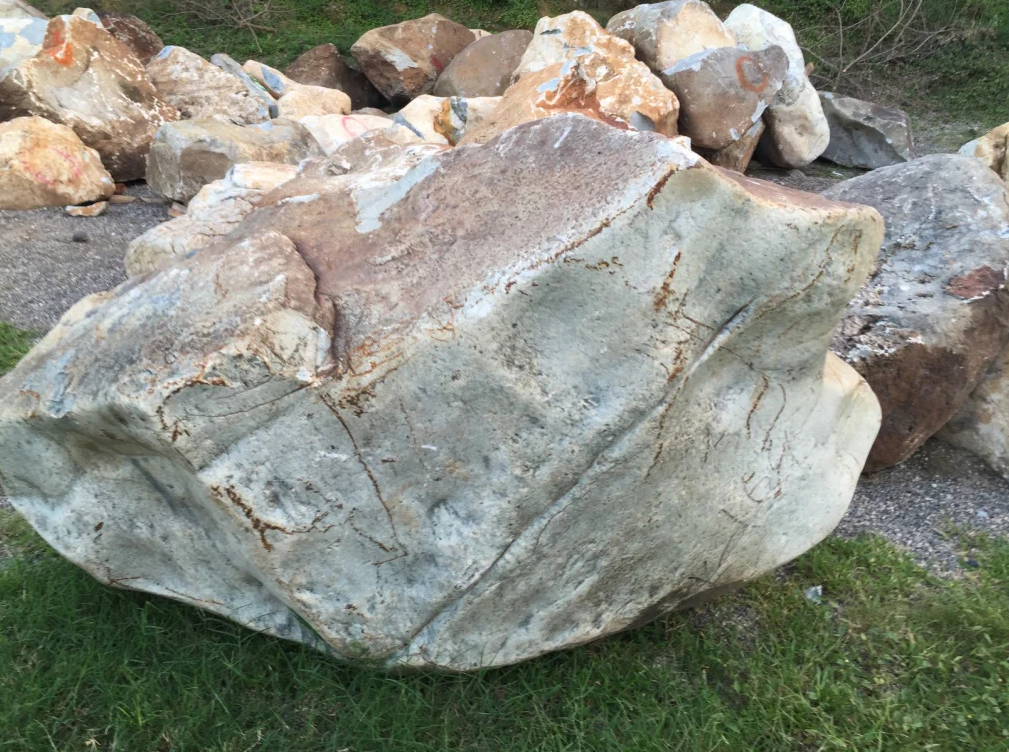
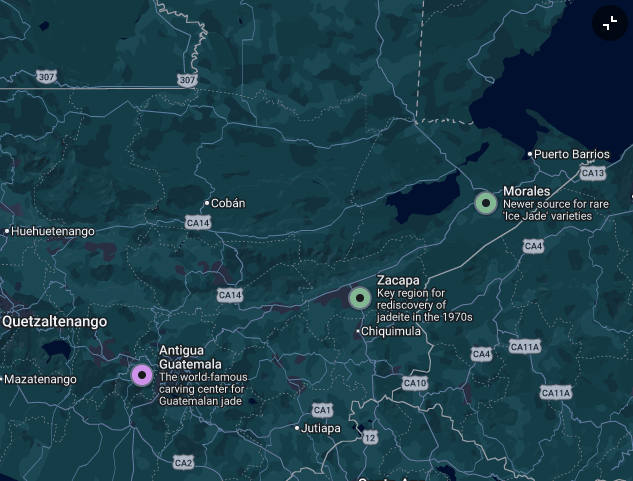
The geography of Guatemalan jadeite is defined by a single, massive scar across the landscape: the Motagua Fault Zone. This transform fault is the terrestrial continuation of the Cayman Trench and marks the violent boundary where the North American Plate and the Caribbean Plate slide past each other. This tectonic “suture zone” is the only place in the Americas where the necessary conditions of high pressure and relatively low temperature (HPLT) exist to forge jadeite. The valley itself is a high-altitude, semi-arid desert environment that stands in stark contrast to the lush jungles typically associated with the Maya. Here, the Motagua River acts as a natural excavator, its powerful seasonal floods tearing jadeite boulders from deep within the mountains and depositing them along the riverbanks, where they have been gathered for thousands of years.
Rising sharply to the north of the river is the Sierra de las Minas, or “Jagged Mountain Range of the Miners.” This range is the primary source for some of the world’s most sought-after jadeite colors. The mountains are geologically split by the fault, creating two distinct “batches” of stone. To the south of the fault, the jadeite is ancient, formed roughly 120 to 160 million years ago. To the north, the stone is much younger, created during the Late Cretaceous period around 65 to 95 million years ago. This geological “time split” is why you can find massive differences in texture and color within just a few miles of each other. The Sierra de las Minas is so rugged that many of the ancient quarry sites remain hidden in cloud forests at elevations of 6,000 feet, accessible only by grueling multi-day hikes or on horseback.
Modern mining in this region remains remarkably rudimentary, a conscious choice by leaders like the Ridingers to protect the delicate mountain environment. There are no industrial pits or massive excavators here; instead, the process is a labor-intensive “treasure hunt“. Miners typically travel as close as possible by truck before switching to mules or carrying equipment by hand into the steep ravines. Because jadeite is incredibly tough, it cannot be easily hammered apart. Instead, miners often use non-explosive expansion agents or hydraulic splitters. They drill small holes into a boulder, fill them with a special expansive grout, and wait as the grout slowly expands with enough force to crack the jade. This method ensures that the stone’s internal structure isn’t shattered by explosives, preserving the massive boulders needed for large-scale sculptures.
The “newest” frontier in Guatemalan geography is the Izabal Department in the northeast. This area has recently revealed “Ice Jade“—a near-transparent variety that was previously thought to exist only in Myanmar. The Morales mine in Izabal lies in a strike-slip basin where mantle rock has been recrystallized under extreme shearing action. The discovery of these translucent “ice” and “water” jades has shifted the global market, as Guatemala is now the only significant source of high-quality jadeite outside of Asia. These remote mines are so valuable that their exact locations are often kept secret to prevent looting, yet they continue to provide the raw material that fuels the burgeoning lapidary workshops of Antigua.
Finally, the geography of the Motagua Valley dictates the path of the Modern Jade Road. Once a boulder is extracted from the highlands, it begins a precarious journey down the mountain trails to the nearest road. From there, it is transported to the carving centers, primarily in the colonial city of Antigua. This movement of stone from the “Heart of the Earth” in the mountains to the hands of the carvers in the city is a continuation of the same trade routes used by the Maya to supply their great lowland cities. For the jade carvers and lapidaries, understanding this journey—from a tectonic collision 40 kilometers deep, to a riverbed in a desert valley, to a mule-back trip down a mountain—is essential to appreciating the sheer human effort required to bring a single piece of Guatemalan jadeite to the light.
Forensic Identification — The Scientific Signature of Guatemalan Jadeite
The primary challenge in identifying Guatemalan jadeite is its geological proximity to Serpentine, which is the “host rock” or mother-lode material in the Motagua Valley. To the untrained eye, a wet piece of green serpentine can appear identical to high-quality jadeite, yet it is worth a fraction of the price and lacks the durability of the “Stone of Kings.” The first scientific benchmark for identification is the Specific Gravity (SG) Test, which measures the density of the stone. Jadeite is a remarkably heavy mineral with a specific gravity ranging from 3.25 to 3.43. To perform this test, you must use a hydrostatic balance to weigh the stone in air and then again in water. If the resulting density is below 3.0, you are almost certainly holding serpentine (which averages 2.4 to 2.8). This density is caused by the tightly packed pyroxene crystalline structure of jadeite, a result of the extreme tectonic pressures in the Sierra de las Minas that its lookalikes never experienced.
The second tier of identification is the Mohs Hardness and Structural Integrity Test. While nephrite (like Pounamu) sits at a 6.5, Guatemalan jadeite is significantly harder, sitting firmly at 7.0 on the Mohs scale. This means it is literally “harder than steel.” A standard stainless-steel knife or a high-carbon steel file will not leave a mark on genuine jadeite; instead, the stone will often shave the metal off the tool, leaving a metallic grey line that can be wiped away. Furthermore, unlike the fibrous internal structure of nephrite, jadeite has a granular, interlocking crystalline structure. When examined under a 10x or 20x jeweler’s loupe, the surface of a polished piece of Guatemalan jadeite will often show a subtle “leather” or “orange peel” texture—tiny, shimmering reflections from the individual crystal faces. If the stone appears perfectly smooth and “glassy” without these crystalline reflections or has visible micro-bubbles of air, it may be a synthetic or a microcrystalline quartz imitation like Green Jasper.
A unique “tell” for Guatemalan material is the presence of Albeit inclusions, or Pyrite (Fool’s Gold) and Magnetite. Because of the high iron and sulfide content in the Motagua Valley, many varieties of Guatemalan jadeite—especially the “Black Galactic” and deep “Olmec Blue“—contain tiny, visible metallic flecks. These look like shimmering gold or silver dust trapped within the stone. This is a crucial identifier because Burmese (Myanmar) Jadeite rarely, if ever, contains pyrite. If you see golden sparkles in a high-density green or black stone, it is a very high-probability indicator of Guatemalan origin. Additionally, many black jadeite specimens from Myanmarr are actually a deep, saturated green that only reveals itself as a vibrant “emerald” hue when sliced extremely thin (less than 2mm) or held against a high-lumen (1000+) LED light source. Guatemala is one of the only sources of a “true black” jadeite due to graphite inclusions and it’s high iron content.
For high-value “Ice Jade” or “Water Jade” from the Izabal region, you must utilize the Refractive Index (RI) Test. Using a refractometer, an expert will find that jadeite has a very specific refractive index of 1.66. Any deviation from this (for example, the 1.54 of quartz or the 1.55 of serpentine) is an immediate disqualifier. Furthermore, many imitations use a “dye” to mimic the vibrant greens of the Maya. To spot this, use a Chelsea Filter combined with a high-intensity incandescent light. While natural Guatemalan jadeite will stay a neutral green or grey under the filter, many dyed stones will turn a distinct reddish or pinkish hue. However, be aware that some modern polymer-impregnated “B-Jade” may not react to the filter, which is why a Spectroscopic Analysis is the final word. Genuine jadeite shows a distinct absorption line at 437nm in the violet part of the spectrum; if this line is missing, the stone’s identity is in question.
Finally, we must address the Auditory and Thermal Forensic Tests. Because of its extreme density and pyroxene structure, jadeite has a unique “ring.” If you suspend two unmounted pieces of Guatemalan jadeite from a string and tap them together, they should produce a clear, high-pitched, metallic “tink” that resonates for a second. Plastic or resin-based “Fake Jade” will produce a dull, plastic “clack,” and even serpentine will sound flat by comparison. Thermally, jadeite is an exceptional heat sink. When you first pick it up, it should feel notably colder than the surrounding air and stay cold for several seconds even in a warm hand. If the stone warms up almost instantly, it is likely a resin-filled imitation or glass. For the professional lapidary or avid collector, these are examples of simple tests that are used as tools to aide that every piece of Guatemalan jadeite is not just a “pretty green rock,” but a verified geological treasure with a 3,000-year pedigree.
The Lapidary Mastery and Carving of Guatemalan Jadeite
The lapidary journey of Guatemalan jadeite begins with a technical hurdle that is unique to this stone: its immense compressive strength and granular crystalline structure. Unlike the “felted” nephrite which is tough and fibrous, jadeite is a collection of interlocking crystals. This means that while it is harder, it can also be more prone to “micro-fracturing” if improperly handled with brute force. In the workshops of lapidaries, the process begins with the thermal shock reduction of large boulders. Because these stones are often too large for hand tools, the lapidary must use Diamond-Sintered Saws with a constant, high-pressure coolant (such as water or food grade mineral oil). If the blade runs dry for even a few seconds, the friction will reach temperatures high enough to “calcify” the jadeite, turning the vibrant green into a dull, white, brittle mess that cannot be restored. The high heat and friction caused by not using a coolant may also destroy these diamond saw blades, ultimately costing the lapidary thousands of dollars.
Once the “blank” or “slab” is established, the carving phase requires a mastery of high-speed abrasive reduction. Because you cannot chisel jadeite, every curve of a Maya-style mask or an Olmec-style votive axe is ground away using diamond-encrusted burrs. Carvers often use hand tools that operate at speeds between 15,000 and 30,000 RPM. A specific technical secret for Guatemalan jadeite is the “thin-cut” approach. Because many varieties, such as the deep “Olmec Blue” or “Princesa Blue,” are so saturated with iron and chromium, they can appear opaque in thick blocks. The carver must meticulously grind down the piece—sometimes to a thickness of less than 1.5mm—to allow light to pass through the crystalline lattice. This creates the “inner glow” that characterizes high-end Guatemalan art. This stage is a high-stakes gamble; one millimeter too deep and the diamond burr will punch through the stone, destroying weeks of labor in a fraction of a second.
The transition from carving to sanding involves a rigorous grit sequence that is strictly followed to avoid the dreaded “orange peel” texture. Because jadeite is composed of individual crystals of varying hardness, improper sanding will wear away the softer areas faster than the harder ones, leaving the surface looking like the skin of an orange. To prevent this, carvers move through a “hard-backed” sanding process. They start with a 80-grit diamond disc, moving to 280, 600, and 1200. Unlike nephrite, which can be sanded with flexible belts, jadeite often requires slip-sticks or bamboo stick grinding with loose diamond grit to ensure the surface remains perfectly planar and the crystals are ground down at a uniform rate. This “leveling” of the crystals is what prepares the stone for its signature vitreous, or glassy, luster.
The polishing of Guatemalan jadeite is where the stone finally reveals its vibrant or “glowing” character. While nephrite takes a “waxy” polish, jadeite is prized for a high-gloss, mirror-like finish. This is achieved by moving into the ultra-fine diamond grits—3,000 to 14,000—and finally a 50,000-grit diamond paste on a hard felt or wood lap. In the final stage, many jade carving masters use a “dry-buff” technique with Chrome Oxide or Micro-Alumina on a leather wheel. This final pass creates a “surface flow” on a molecular level, closing the last of the crystalline pores and giving the stone a shine that looks like a thin layer of water is sitting on the surface. This is the “glassy luster” that is the primary diagnostic feature of high-quality jadeite. It creates a play of light that is much sharper and more reflective than the soft glow of most other stone pendants.
This traditional “closing of the stone” is believed to settle the K’uh (divine essence) within the newly created jadeite sculpture. The resulting piece is a technical and spiritual triumph: a stone that is harder than steel, translucent as ice, and polished to a shine that will not dull for thousands of years. When a customer at Luki Lapidary holds a finished Guatemalan jadeite piece, they are feeling the result of over 3,500 years of history—a marriage of the Earth’s tectonic violence and the carver’s surgical restraint.