
Pounamu
EVERYTHING YOU NEED TO KNOW ABOUT POUNAMU
The story of Pounamu begins nearly 300 million years ago, deep within the churning mantle of the Earth, long before the first human footprint touched the soil of Aotearoa. This stone was forged under unimaginable pressure and heat, at the precise point where the Pacific and Indo-Australian tectonic plates collide. This geological violence created a unique metamorphic miracle: the interlocking fibrous structure of nephrite jade. Unlike other stones that grow in crystalline structures—making them prone to shattering—Pounamu grew like a dense, microscopic fabric. This “felted” internal weave is what allowed Māori ancestors to create tools that could strike the hardest wood without fracturing, a feat of nature that no other material in the South Pacific could match.
When the first Polynesian explorers arrived in the 13th century, they were already masters of lithic (stone) technology, but Pounamu presented a challenge unlike anything they had faced in the islands of Hawaiki. The stone was so incredibly tough that it could not be flaked or chipped using traditional percussion methods that you would typically use with flint. This led to the birth of a unique Māori lapidary tradition. Early artisans had to develop a process of “hewing and grinding” (toki-pounamu), using quartz sand and water as an abrasive. A single adze could take months, or even years, of rhythmic hand-grinding to complete. This immense investment of time meant that every piece of pounamu was inherently sacred; it represented the life-energy and patience of the maker, leading to the belief that the stone was not just a tool, but a vessel for Mauri (life force).
As tribes moved further inland and discovered the “mother lodes” in the Arahura and Hokitika riverbeds, pounamu became the primary currency of the land. The “Greenstone Trails” (Ara Tawhito) were established—treacherous mountain passes over the Southern Alps where traders carried heavy boulders of raw stone on their backs to be traded for obsidian, feathers, and food in the North Island. These trails became the diplomatic arteries of the nation. To possess pounamu was to possess the ultimate form of wealth, and because the stone was practically indestructible, it became the ultimate heirloom. A single Hei-Tiki could be worn by twenty generations of chiefs, absorbing the sweat, mana, and history of every person who wore it. By the time of European contact, pounamu had transcended its use as a tool and had become the physical manifestation of Māori sovereignty and ancestral connection.
Spiritual Beliefs & Religious significance
The Legend of Poutini and the Mother Lode
To understand pounamu, one must look beyond the physical mineral and into the metaphysical world of the Māori, where every rock, tree, and river possesses a Mauri (life force). Pounamu is considered the most potent carrier of this force. In Māori cosmology, the stone is often referred to as the “fish of Poutini.” Poutini was a Taniwha, a giant guardian spirit in the form of a shark or water monster, who served as the protector of the stone. The legend tells of Poutini’s abduction of a beautiful woman named Waitaiki from the North Island. He fled with her across the mountains and rivers of the South Island, pursued by her husband, Tamahua, a powerful spiritual seeker. Realizing he could not keep her, Poutini transformed Waitaiki into his own essence—pounamu—and laid her in the bed of the Arahura River to hide her forever. This is why the stone is found in the water and why it possesses a “living” quality. When carvers work the stone today, many still perform karakia (prayers) to acknowledge Poutini and Waitaiki, ensuring the stone’s transition from riverbed to ornament is handled with the proper spiritual permission.
To understand pounamu, one must look beyond the physical mineral and into the metaphysical world of the Māori, where every rock, tree, and river possesses a Mauri (life force). Pounamu is considered the most potent carrier of this force. In Māori cosmology, the stone is often referred to as the “fish of Poutini.” Poutini was a Taniwha, a giant guardian spirit in the form of a shark or water monster, who served as the protector of the stone. The legend tells of Poutini’s abduction of a beautiful woman named Waitaiki from the North Island. He fled with her across the mountains and rivers of the South Island, pursued by her husband, Tamahua, a powerful spiritual seeker. Realizing he could not keep her, Poutini transformed Waitaiki into his own essence—pounamu—and laid her in the bed of the Arahura River to hide her forever. This is why the stone is found in the water and why it possesses a “living” quality. When carvers work the stone today, many still perform karakia (prayers) to acknowledge Poutini and Waitaiki, ensuring the stone’s transition from riverbed to ornament is handled with the proper spiritual permission.
The Concept of Mana and Ancestral Connection
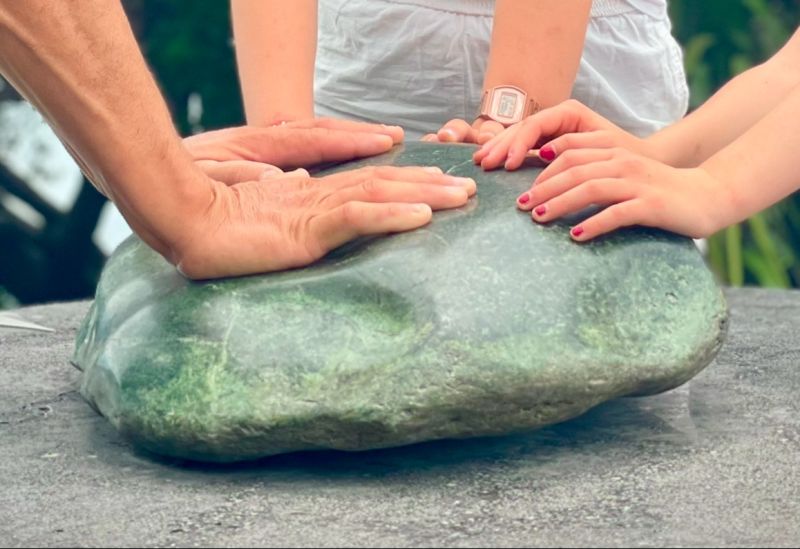
The concept of Mana (prestige and spiritual authority) is inextricably linked to the stone. It is believed that pounamu has a unique ability to absorb the energy of those who wear it. This is why traditional pounamu is never supposed to be bought for oneself; it should be gifted. The act of gifting creates a bond between the giver, the receiver, and the stone itself. Over time, the stone becomes a “memory vessel.” If a woman wears a pounamu pendant through her life and passes it to her granddaughter, that granddaughter is not just wearing a piece of jewelry; she is wearing her grandmother’s warmth, her history, and her spirit. This belief is so strong that many Māori will not allow their pounamu to be touched by strangers, as the stone’s energy is sensitive to the intentions of others. The oils from the skin over decades of wear change the stone’s surface, creating a “waxy” patina that is seen as a physical manifestation of the time it has spent protecting its wearer.
The concept of Mana (prestige and spiritual authority) is inextricably linked to the stone. It is believed that pounamu has a unique ability to absorb the energy of those who wear it. This is why traditional pounamu is never supposed to be bought for oneself; it should be gifted. The act of gifting creates a bond between the giver, the receiver, and the stone itself. Over time, the stone becomes a “memory vessel.” If a woman wears a pounamu pendant through her life and passes it to her granddaughter, that granddaughter is not just wearing a piece of jewelry; she is wearing her grandmother’s warmth, her history, and her spirit. This belief is so strong that many Māori will not allow their pounamu to be touched by strangers, as the stone’s energy is sensitive to the intentions of others. The oils from the skin over decades of wear change the stone’s surface, creating a “waxy” patina that is seen as a physical manifestation of the time it has spent protecting its wearer.
Sacred Symbols: The Koru, Hei-Matau, and Manaia
The spiritual significance extends into the specific geometry of the carvings, which act as a visual language of the soul. The Koru (the unfolding fern frond) is perhaps the most famous, representing new life, growth, and the perpetual movement of the spirit. It symbolizes the idea that life is a continuous cycle of beginning and end, always returning to the source. The Hei-Matau (the fish hook) is a symbol of prosperity, abundance, and safe passage over water—essential for a seafaring people. It also acknowledges the bounty of the ocean and the responsibility of the wearer to be a provider. The Manaia is a spiritual guardian, often depicted with the head of a bird, the body of a man, and the tail of a fish. It is the messenger between the earthly world and the spirit realm, watching over the wearer and warding off evil. When an individual wears these symbols, they are calling upon these ancient archetypes for guidance and protection in their daily lives.
The spiritual significance extends into the specific geometry of the carvings, which act as a visual language of the soul. The Koru (the unfolding fern frond) is perhaps the most famous, representing new life, growth, and the perpetual movement of the spirit. It symbolizes the idea that life is a continuous cycle of beginning and end, always returning to the source. The Hei-Matau (the fish hook) is a symbol of prosperity, abundance, and safe passage over water—essential for a seafaring people. It also acknowledges the bounty of the ocean and the responsibility of the wearer to be a provider. The Manaia is a spiritual guardian, often depicted with the head of a bird, the body of a man, and the tail of a fish. It is the messenger between the earthly world and the spirit realm, watching over the wearer and warding off evil. When an individual wears these symbols, they are calling upon these ancient archetypes for guidance and protection in their daily lives.
The Breaking of a Stone: A Spiritual Sacrifice
A common belief among those who carry pounamu is that the stone is a protective shield. Because it possesses Mauri, it is sensitive to the spiritual environment. It is widely believed that if a piece of pounamu breaks or is lost unexpectedly, it has “taken a hit” for the wearer. In this worldview, the stone has sacrificed its physical form to absorb a negative energy, a bad omen, or a physical accident that was meant for the person. Rather than viewing a broken stone with sadness, many see it with gratitude, acknowledging the stone’s service. When a stone reaches the end of its life, it is often returned to the earth or the river, completing the cycle that began with Poutini and Waitaiki millions of years ago. This deep reverence ensures that pounamu is never treated as a common commodity, but as a lifelong companion on one’s spiritual journey.
A common belief among those who carry pounamu is that the stone is a protective shield. Because it possesses Mauri, it is sensitive to the spiritual environment. It is widely believed that if a piece of pounamu breaks or is lost unexpectedly, it has “taken a hit” for the wearer. In this worldview, the stone has sacrificed its physical form to absorb a negative energy, a bad omen, or a physical accident that was meant for the person. Rather than viewing a broken stone with sadness, many see it with gratitude, acknowledging the stone’s service. When a stone reaches the end of its life, it is often returned to the earth or the river, completing the cycle that began with Poutini and Waitaiki millions of years ago. This deep reverence ensures that pounamu is never treated as a common commodity, but as a lifelong companion on one’s spiritual journey.
Where and How is Pounamu Found
The Geological Crucible of the Southern Alps
The physical journey of pounamu is as dramatic as its spiritual one, beginning ten kilometers beneath the Earth’s surface. Pounamu is found exclusively in the South Island of New Zealand—Te Wai Pounamu—because it requires a specific geological “recipe” that exists nowhere else in the country. It is a metamorphic rock, created when the Pacific Plate and the Indo-Australian Plate grind together along the Alpine Fault. The immense heat and pressure of this subduction zone transform ordinary minerals into the tough, interlocking fibers of nephrite jade, bowenite, and serpentine. Over millions of years, the Southern Alps have been pushed upward by these tectonic forces, bringing the jade with them and often blending the different minerals together. As the mountains rise, the relentless forces of nature—frost, rain, and snow—begin the process of “harvesting.” Glaciers and torrential mountain rivers tear the stone from its host rock, high in the alpine ridges, and begin the long, violent journey toward the sea. By the time a boulder reaches a riverbed where a person can find it, it has survived thousands of years of tumbling, which naturally weeds out most of the “weak” stone and leaves some of the toughest jade behind.
The physical journey of pounamu is as dramatic as its spiritual one, beginning ten kilometers beneath the Earth’s surface. Pounamu is found exclusively in the South Island of New Zealand—Te Wai Pounamu—because it requires a specific geological “recipe” that exists nowhere else in the country. It is a metamorphic rock, created when the Pacific Plate and the Indo-Australian Plate grind together along the Alpine Fault. The immense heat and pressure of this subduction zone transform ordinary minerals into the tough, interlocking fibers of nephrite jade, bowenite, and serpentine. Over millions of years, the Southern Alps have been pushed upward by these tectonic forces, bringing the jade with them and often blending the different minerals together. As the mountains rise, the relentless forces of nature—frost, rain, and snow—begin the process of “harvesting.” Glaciers and torrential mountain rivers tear the stone from its host rock, high in the alpine ridges, and begin the long, violent journey toward the sea. By the time a boulder reaches a riverbed where a person can find it, it has survived thousands of years of tumbling, which naturally weeds out most of the “weak” stone and leaves some of the toughest jade behind.
The Four Great Sources: From Westland to Fiordland
While pounamu can be found in small deposits elsewhere, there are four primary “provinces” where the stone has been gathered for centuries. The most famous is the West Coast, specifically the Arahura River. This river is considered the most sacred of all pounamu sources; the stone found here is legendary for its variety and quality, ranging from the translucent Inanga to the deep, dark Kawakawa. Further south lies Hokitika, the modern-day “Jade Capital,” where the river mouth often yields treasures after a storm. The third major source is the remote and primeval wilderness of Fiordland, particularly around Milford Sound (Piopiotahi). The stone here is often Bowenite (Tangiwai), which is softer and more glass-like than nephrite, prized for its extreme translucency. Finally, there are the alpine deposits in Western Southland and parts of the Nelson district. Each location produces stone with a unique “fingerprint”—a specific shade of green or a certain pattern of inclusions—that allows experienced lapidaries to look at a finished carving and tell you exactly which riverbed the raw stone came from.
While pounamu can be found in small deposits elsewhere, there are four primary “provinces” where the stone has been gathered for centuries. The most famous is the West Coast, specifically the Arahura River. This river is considered the most sacred of all pounamu sources; the stone found here is legendary for its variety and quality, ranging from the translucent Inanga to the deep, dark Kawakawa. Further south lies Hokitika, the modern-day “Jade Capital,” where the river mouth often yields treasures after a storm. The third major source is the remote and primeval wilderness of Fiordland, particularly around Milford Sound (Piopiotahi). The stone here is often Bowenite (Tangiwai), which is softer and more glass-like than nephrite, prized for its extreme translucency. Finally, there are the alpine deposits in Western Southland and parts of the Nelson district. Each location produces stone with a unique “fingerprint”—a specific shade of green or a certain pattern of inclusions—that allows experienced lapidaries to look at a finished carving and tell you exactly which riverbed the raw stone came from.
The Art of the Hunt: Fossicking and Guardianship
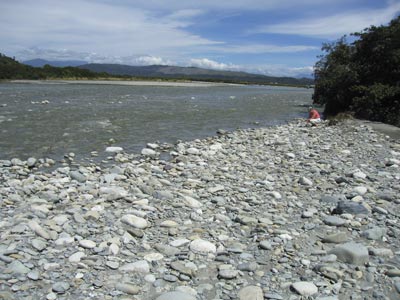
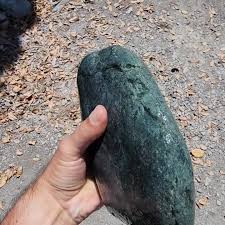
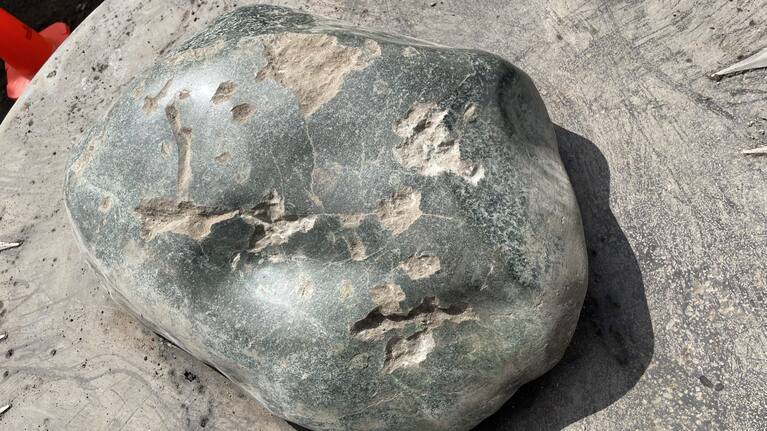
Finding pounamu is not like traditional mining; you don’t dig holes in the ground. Instead, it is a process of fossicking—walking the riverbeds and beaches with a keen eye and a patient soul. To the untrained eye, a raw pounamu boulder is invisible. Over time, the stone develops a “rind”—a weathered, crusty outer layer that is usually a dull grey, creamy white, or rusty brown. It looks exactly like every other river stone. However, when the stone is wet, or when it is held up to the sunlight, the “glow” of the green heart can sometimes be seen through a thin part of the rind. Professional stone hunters often wait for a “fresh” river—a period immediately following a massive flood—when the water has turned over the gravel and exposed new boulders that haven’t been seen for decades. Today, this process is strictly managed under the Ngāi Tahu Pounamu Resource Management Plan. This ensures that the stone is collected ethically and sustainably, preserving the “life blood of the land” for future generations. For many, finding a piece of pounamu is seen as a destined event; it is said that you do not find the stone, the stone finds you when you are ready to receive it.
Finding pounamu is not like traditional mining; you don’t dig holes in the ground. Instead, it is a process of fossicking—walking the riverbeds and beaches with a keen eye and a patient soul. To the untrained eye, a raw pounamu boulder is invisible. Over time, the stone develops a “rind”—a weathered, crusty outer layer that is usually a dull grey, creamy white, or rusty brown. It looks exactly like every other river stone. However, when the stone is wet, or when it is held up to the sunlight, the “glow” of the green heart can sometimes be seen through a thin part of the rind. Professional stone hunters often wait for a “fresh” river—a period immediately following a massive flood—when the water has turned over the gravel and exposed new boulders that haven’t been seen for decades. Today, this process is strictly managed under the Ngāi Tahu Pounamu Resource Management Plan. This ensures that the stone is collected ethically and sustainably, preserving the “life blood of the land” for future generations. For many, finding a piece of pounamu is seen as a destined event; it is said that you do not find the stone, the stone finds you when you are ready to receive it.
Identification - How to Know it's Pounamu
The Physical Signature of Nephrite Jade
Identifying genuine Pounamu in a market often saturated with imitations—such as Australian jade, Chinese serpentine, or even green glass—requires a keen understanding of the stone’s physical and chemical “signature.” Pounamu is primarily Nephrite Jade, a calcium-magnesium silicate characterized by an incredibly dense, felted microscopic structure. Unlike other gemstones that grow in crystalline clusters (like quartz or emerald), Pounamu’s fibers are woven together like a piece of high-tensile fabric. This is why, when you hold a piece of authentic Pounamu, it should feel notably heavy and “dense” for its size. It has a high specific gravity; if you weigh a piece of Pounamu and a piece of glass of the exact same size, the Pounamu will be significantly heavier. This “heft” is the first thing a lapidary or collector feels for. If a piece feels light, “plasticy,” or hollow, it is an immediate red flag that you are dealing with an imitation.
Identifying genuine Pounamu in a market often saturated with imitations—such as Australian jade, Chinese serpentine, or even green glass—requires a keen understanding of the stone’s physical and chemical “signature.” Pounamu is primarily Nephrite Jade, a calcium-magnesium silicate characterized by an incredibly dense, felted microscopic structure. Unlike other gemstones that grow in crystalline clusters (like quartz or emerald), Pounamu’s fibers are woven together like a piece of high-tensile fabric. This is why, when you hold a piece of authentic Pounamu, it should feel notably heavy and “dense” for its size. It has a high specific gravity; if you weigh a piece of Pounamu and a piece of glass of the exact same size, the Pounamu will be significantly heavier. This “heft” is the first thing a lapidary or collector feels for. If a piece feels light, “plasticy,” or hollow, it is an immediate red flag that you are dealing with an imitation.
The Light and Transparency Test
One of the most effective ways to identify real Pounamu is the Transparency and Inclusion Test. Using a strong LED torch or holding the stone up to the midday sun, look into the heart of the material. Real Pounamu is rarely “perfect,” and uniform. Sometimes it is completely opaque, without any translucency. Because it was born from tectonic violence, it is almost always filled with “life”—tiny black specks of chromite or magnetite, clouds of lighter green, or swirling patterns that look like smoke trapped in ice. These are not flaws; they are the stone’s fingerprints. The blend of nephrite, serpentine, or bowenite is often quite common. If you see tiny, perfectly round air bubbles, you are looking at green glass. If the color is 100% uniform with no internal variation at all, it is likely a synthetic or a low-grade mass-produced stone from overseas. Furthermore, check for Pleochroism: as you tilt Pounamu under the light, sometimes the shade of green will shift and change slightly in depth. Synthetic materials look flat and “one-note” no matter how you turn them.
One of the most effective ways to identify real Pounamu is the Transparency and Inclusion Test. Using a strong LED torch or holding the stone up to the midday sun, look into the heart of the material. Real Pounamu is rarely “perfect,” and uniform. Sometimes it is completely opaque, without any translucency. Because it was born from tectonic violence, it is almost always filled with “life”—tiny black specks of chromite or magnetite, clouds of lighter green, or swirling patterns that look like smoke trapped in ice. These are not flaws; they are the stone’s fingerprints. The blend of nephrite, serpentine, or bowenite is often quite common. If you see tiny, perfectly round air bubbles, you are looking at green glass. If the color is 100% uniform with no internal variation at all, it is likely a synthetic or a low-grade mass-produced stone from overseas. Furthermore, check for Pleochroism: as you tilt Pounamu under the light, sometimes the shade of green will shift and change slightly in depth. Synthetic materials look flat and “one-note” no matter how you turn them.
The Hardness and Temperature Test
Because of its unique composition, Pounamu has specific thermal and structural properties. First, there is the Temperature Test: Jade is a poor conductor of heat. When you pick up a piece of real Pounamu that has been sitting on a table, it should feel cold to the touch, and it should stay cold for several seconds even after you’ve held it in your palm. Glass or resin will warm up almost instantly to your body temperature. Second is the Hardness Test: Pounamu sits at a 6 to 6.5 on the Mohs scale. This means it is harder than common steel. If you take a standard steel needle or a copper coin and try to scratch an inconspicuous area on the back of the stone, a real piece of Pounamu will not leave a mark. If the needle leaves a white, chalky scratch, the stone is likely serpentine (often marketed as “New Jade”), which is a much softer and less valuable mineral. In the Ngāi Tahu settlement, serpentine is also included under the definition of pounamu even though it’s not necessarily a traditional material. It’s one of the materials that can make up Pounamu, and it’s also something to be aware of when buying. People do sell both serpentine and nephrite based pounamu, and if it’s not specified, someone might think they’re getting nephrite when they’re actually getting serpentine.
Because of its unique composition, Pounamu has specific thermal and structural properties. First, there is the Temperature Test: Jade is a poor conductor of heat. When you pick up a piece of real Pounamu that has been sitting on a table, it should feel cold to the touch, and it should stay cold for several seconds even after you’ve held it in your palm. Glass or resin will warm up almost instantly to your body temperature. Second is the Hardness Test: Pounamu sits at a 6 to 6.5 on the Mohs scale. This means it is harder than common steel. If you take a standard steel needle or a copper coin and try to scratch an inconspicuous area on the back of the stone, a real piece of Pounamu will not leave a mark. If the needle leaves a white, chalky scratch, the stone is likely serpentine (often marketed as “New Jade”), which is a much softer and less valuable mineral. In the Ngāi Tahu settlement, serpentine is also included under the definition of pounamu even though it’s not necessarily a traditional material. It’s one of the materials that can make up Pounamu, and it’s also something to be aware of when buying. People do sell both serpentine and nephrite based pounamu, and if it’s not specified, someone might think they’re getting nephrite when they’re actually getting serpentine.
The Sound of Authenticity and Traceability
Finally, there are the auditory and ethical markers of true Pounamu. If you have two unmounted stones and gently clink them together, most nephrite produces a clear, musical, and high-pitched “ring” that resonates for a moment. Lower-quality stones or glass produce a dull, flat “thud.” However, the most important identifier in the modern world is the Ngāi Tahu Authentication Scheme. To make things even more confusing, not all Ngāi Tahu authenticated Pounamu is high quality either. Their grading system goes right down from A grade to F grade, and some of that lower-grade material has a much duller, flatter sound. So even within nephrite, there’s a wide range of quality. Not all of it is the highly translucent, fine-grained, high-pitched ringing stone. There’s a lot of variation that is still valid Pounamu but not necessarily of the grade traditionally used for tools or seen in artefacts.
Finally, there are the auditory and ethical markers of true Pounamu. If you have two unmounted stones and gently clink them together, most nephrite produces a clear, musical, and high-pitched “ring” that resonates for a moment. Lower-quality stones or glass produce a dull, flat “thud.” However, the most important identifier in the modern world is the Ngāi Tahu Authentication Scheme. To make things even more confusing, not all Ngāi Tahu authenticated Pounamu is high quality either. Their grading system goes right down from A grade to F grade, and some of that lower-grade material has a much duller, flatter sound. So even within nephrite, there’s a wide range of quality. Not all of it is the highly translucent, fine-grained, high-pitched ringing stone. There’s a lot of variation that is still valid Pounamu but not necessarily of the grade traditionally used for tools or seen in artefacts.
Because Pounamu is a protected treasure, genuine New Zealand stone is often sold with a unique traceability code. This code is the ultimate proof; it allows you to log onto a database and see exactly which river the stone was harvested from and which artist carved it. If a seller is vague about the stone’s origin or cannot provide a provenance story, it is highly likely the stone was imported. Buying authenticated Pounamu ensures that you are holding a piece of New Zealand’s soul, not a factory-made imitation from across the sea.
How is Pounamu Cut and Carved
The Challenge of Interlocking Fibers
To the average person, “carving” usually implies a hammer and a chisel, much like a sculptor working with marble or granite. However, pounamu is fundamentally different due to its nephrite structure. Because the stone is composed of millions of microscopic, interlocking fibers woven together like a piece of high-tensile fabric, it does not “chip” or “flake.” If you were to strike a pounamu boulder with a chisel, the energy of the blow would simply dissipate through the fibers, or worse, cause the stone to shatter in an unpredictable “bruise.” Therefore, the lapidary artist cannot carve the stone in the traditional sense; they must abrade it. Every curve, hole, and facet is created by slowly grinding the stone away using diamond-encrusted tools. It is a process of subtraction that requires extreme patience and a constant flow of water to act as both a lubricant and a coolant, preventing the stone from “burning” or cracking under the friction of the tools.
To the average person, “carving” usually implies a hammer and a chisel, much like a sculptor working with marble or granite. However, pounamu is fundamentally different due to its nephrite structure. Because the stone is composed of millions of microscopic, interlocking fibers woven together like a piece of high-tensile fabric, it does not “chip” or “flake.” If you were to strike a pounamu boulder with a chisel, the energy of the blow would simply dissipate through the fibers, or worse, cause the stone to shatter in an unpredictable “bruise.” Therefore, the lapidary artist cannot carve the stone in the traditional sense; they must abrade it. Every curve, hole, and facet is created by slowly grinding the stone away using diamond-encrusted tools. It is a process of subtraction that requires extreme patience and a constant flow of water to act as both a lubricant and a coolant, preventing the stone from “burning” or cracking under the friction of the tools.
Slabbing and the Moment of Truth
The journey from raw boulder to finished carving begins with the slab saw. This is a large, diamond-tipped blade that slices through the rock much like a bread slicer. This is often called the “moment of truth” for the lapidary artist. Because pounamu is found in riverbeds, a boulder may look beautiful on the outside but contain deep internal fractures, “dead” white spots, or hidden inclusions of iron that make it unusable for delicate work. Once the boulder is sliced into “slabs” (usually 6mm to 10mm thick), the artist holds the stone up to a powerful light to inspect the “grain” and transparency. They then draw the design directly onto the stone with a waterproof marker, carefully positioning the piece to avoid any structural weaknesses and to highlight the most beautiful “clouds” or color shifts within the jade.
The journey from raw boulder to finished carving begins with the slab saw. This is a large, diamond-tipped blade that slices through the rock much like a bread slicer. This is often called the “moment of truth” for the lapidary artist. Because pounamu is found in riverbeds, a boulder may look beautiful on the outside but contain deep internal fractures, “dead” white spots, or hidden inclusions of iron that make it unusable for delicate work. Once the boulder is sliced into “slabs” (usually 6mm to 10mm thick), the artist holds the stone up to a powerful light to inspect the “grain” and transparency. They then draw the design directly onto the stone with a waterproof marker, carefully positioning the piece to avoid any structural weaknesses and to highlight the most beautiful “clouds” or color shifts within the jade.
The Grind: Shaping and Pre-forming
Once the design is marked, the “pre-forming” stage begins. Using a coarse diamond grinding wheel, the artist cuts away the excess stone around the perimeter of the design. This is loud, heavy work that requires a steady hand and a “feel” for the stone. After the basic silhouette is established, the carver moves to smaller, more specialized tools. This is where the true artistry happens. Using rotary burrs—essentially high-speed dental drills tipped with various shapes of diamond grit—the carver etches the deep curves of a Koru, the intricate details of a Hei-Tiki face, or the delicate bridge of a Pikorua (twist). This stage can take anywhere from a few hours to several days depending on the complexity. The artist must be incredibly careful; one slip of the drill at 20,000 RPM can destroy a piece of stone that took millions of years to form and hours to shape.
Once the design is marked, the “pre-forming” stage begins. Using a coarse diamond grinding wheel, the artist cuts away the excess stone around the perimeter of the design. This is loud, heavy work that requires a steady hand and a “feel” for the stone. After the basic silhouette is established, the carver moves to smaller, more specialized tools. This is where the true artistry happens. Using rotary burrs—essentially high-speed dental drills tipped with various shapes of diamond grit—the carver etches the deep curves of a Koru, the intricate details of a Hei-Tiki face, or the delicate bridge of a Pikorua (twist). This stage can take anywhere from a few hours to several days depending on the complexity. The artist must be incredibly careful; one slip of the drill at 20,000 RPM can destroy a piece of stone that took millions of years to form and hours to shape.
The Seven Stages of Polish
The final, and perhaps most critical, phase of the lapidary process is the polishing. Each carver may have their own personal style of shaping, sanding, and polishing. A piece of pounamu straight from the carving burr looks dull, grey, and scratched. To reveal the “heart” of the greenstone, the artist must move the stone through at least seven different stages of sanding. Most often starting with a very coarse 80-grit sandpaper or diamond pad, the artist removes the deep scratches left by the carving tools. They then move to 220-grit, 400-grit, 600-grit, and so on, all the way up to 3000-grit or higher. Each stage must be done perfectly; if a single scratch from the 220-grit stage remains when you move to the 600-grit, it will show up as a glaring flaw in the final product. The final “finish” is a matter of personal style: some artists prefer a “glass” or “mirror” polish that makes the stone shine like a jewel, while others prefer a “waxy” or “satin” finish, achieved with a felt wheel and diamond paste, which many feel better honors the traditional Māori aesthetic and the natural “soft” feel of the nephrite.
The final, and perhaps most critical, phase of the lapidary process is the polishing. Each carver may have their own personal style of shaping, sanding, and polishing. A piece of pounamu straight from the carving burr looks dull, grey, and scratched. To reveal the “heart” of the greenstone, the artist must move the stone through at least seven different stages of sanding. Most often starting with a very coarse 80-grit sandpaper or diamond pad, the artist removes the deep scratches left by the carving tools. They then move to 220-grit, 400-grit, 600-grit, and so on, all the way up to 3000-grit or higher. Each stage must be done perfectly; if a single scratch from the 220-grit stage remains when you move to the 600-grit, it will show up as a glaring flaw in the final product. The final “finish” is a matter of personal style: some artists prefer a “glass” or “mirror” polish that makes the stone shine like a jewel, while others prefer a “waxy” or “satin” finish, achieved with a felt wheel and diamond paste, which many feel better honors the traditional Māori aesthetic and the natural “soft” feel of the nephrite.