
Siberian Nephrite
The Imperial History of Siberian Nephrite
Spiritual Beliefs and the "Stone of Victory"
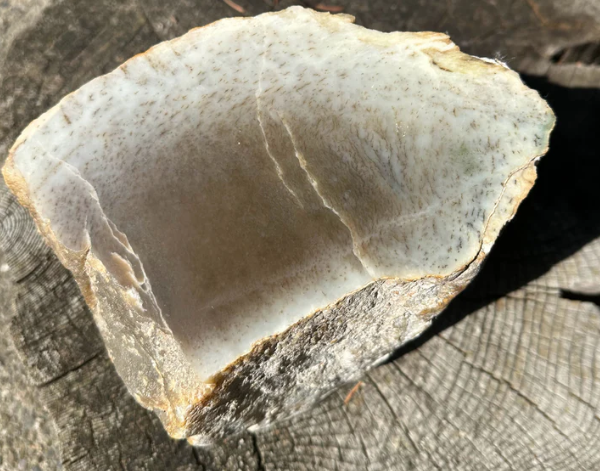
Where Siberian Nephrite is Found
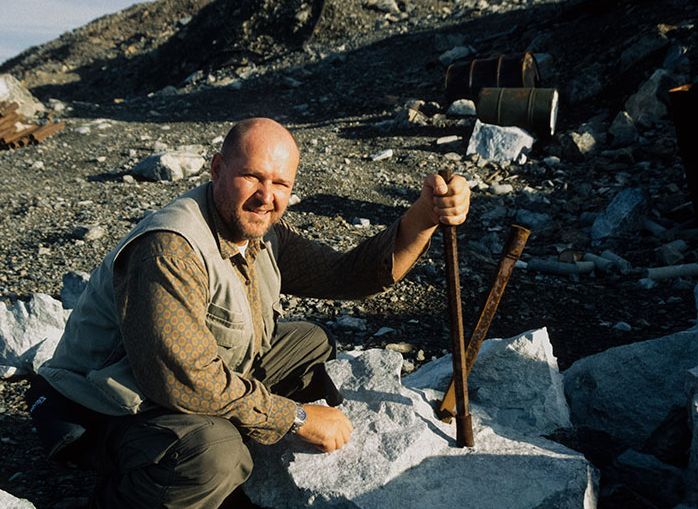
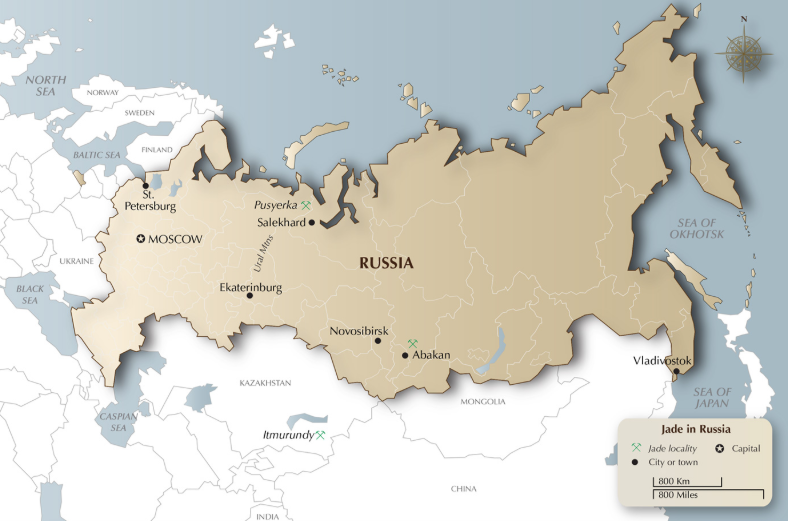
Mining in Siberia is not a casual endeavor; it is a full-scale expedition that requires military-grade equipment and iron resolve. The most productive mines are located at altitudes where the weather can turn deadly in an instant. There are no paved roads to these deposits; miners must utilize retired six-wheel army trucks to navigate frozen riverbeds in the winter or hire heavy-duty helicopters to ferry supplies and personnel during the brief summer thaw. In the winter, the “ice roads” provide the only surface transport for heavy machinery and the massive jade boulders themselves. This isolation is a double-edged sword: it keeps the deposits safe from casual looting but makes the cost of extraction and transport so high that only the most premium grades of stone are economically viable to bring out of the mountains.
Today, the Siberian jade fields are managed under strict Russian federal regulations, with large mining concessions granted to state-sanctioned corporations. However, the vastness of the territory means that independent prospectors and local indigenous hunters still play a role in discovering new veins. The process of modern mining involves injecting non-explosive expansion agents into the rock fractures; explosives are strictly avoided as they would “shatter” the interlocking fibers of the nephrite and ruin its value. After the expansion agents are applied, the miners must often wait a full year for natural freeze-thaw cycles to help split the stone. This slow, patient method of extraction ensures that the 100 to 500 tons produced annually maintain the structural integrity required for high-end lapidary work.
Identification — How to Spot Real Siberian Jade
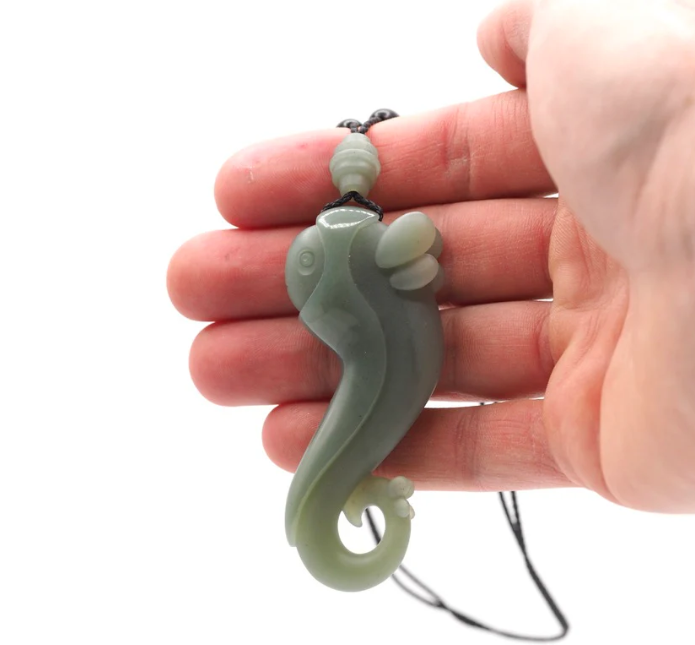
The most immediate identifier of Siberian green nephrite is its extraordinary color, often referred to in the trade as “Spinach Green” (Bi Yu). Unlike Canadian or Chinese green jade, which can often appear “mossy” or greyish, top-grade Siberian material has a vibrant, saturated emerald hue that remains consistent even in thick slabs. When identifying Siberian stone, look for the absence of large, distracting black spots. While most nephrite contains chromite or magnetite inclusions, Siberian jade from the Ospa #7 deposit is famous for having extremely fine, well-distributed specks that do not break the “flow” of the color. If you see a piece of green jade that looks almost “synthetic” due to its perfection and bright, apple-green glow, it is likely a high-end Siberian specimen.
Because Siberian jade is a pure form of nephrite (tremolite-actinolite), it must pass the standard technical benchmarks of the species. It sits firmly between 6.0 and 6.5 on the Mohs scale. You should not be able to scratch it with a common steel knife; if a pocketknife leaves a permanent mark, the stone is likely serpentine (often sold as “Russian Jade” by unscrupulous dealers). Furthermore, Siberian nephrite is incredibly dense. It should feel “hefty” in the hand, far heavier than a piece of green glass or plastic of the same size. For the most expensive “White Siberian” mutton-fat jade, professional identification often requires Raman Spectroscopy to confirm the exact mineral purity, as the value of these stones can exceed tens of thousands of dollars per kilogram.
The Exceptional Grain and Structural Integrity
Achieving a “Mirror-Glass” finish on Siberian nephrite—the hallmark of high-end Russian artifacts—is a labor-intensive process that can take as long as the carving itself. After the 1200-grit sand, the stone is moved to a leather or felt buffing wheel. For Siberian stone, Chrome Oxide (Green rouge) is the gold standard polishing compound, as its chemical properties perfectly match the nephrite’s mineral structure. Some modern masters prefer a diamond paste sequence, moving from 3,000 to 14,000 and finally 50,000 mesh (0.5 micron) for the final “wet” polish. The secret to the deep, “oily” glow of Siberian jade is the final buffing with a cotton “mop” wheel and a specialized compound like Zam or Fabulustre. This final pass must be done with extreme care; the stone is rotated constantly (at least 90 degrees every few seconds) to ensure that the heat is distributed evenly, resulting in a surface so smooth it feels liquid to the touch.
The final step in the lapidary process for Siberian nephrite is the “Seal and Wax.” Because the stone has been ground and polished to a microscopic level, its surface is incredibly smooth but still technically porous at a molecular level. To protect the imperial glow from the natural oils of the skin and environmental moisture, the carving is gently warmed (never exceeding 60°C) and a thin coating of high-quality carnauba or paraffin wax is applied. This wax is buffed off while the stone is still warm, leaving a protective barrier that enhances the “waxy” lustre and provides a subtle, sweet scent characteristic of many antique Russian pieces. This “healing” of the stone’s surface is the final act of the lapidary, turning a cold piece of Siberian permafrost into a warm, living treasure. When you hold a finished piece of Siberian jade, the result of these 2,500+ steps is a material that feels like a solid, green soul—a testament to the incredible patience and technical mastery required to honor the Earth’s finest jade.